Optimal Baby Positioning in Pregnancy
What optimal baby positioning is
Optimal fetal positioning describes the position a baby settles into for birth. Head-down, back facing your left side, chin tucked toward the chest. It's the term used in prenatal and body work communities because position affects how labor unfolds and how comfortable you feel through the final weeks of pregnancy.
Babies move often through early and mid-pregnancy, and most of them find head-down on their own between 32 and 36 weeks. Some settle earlier. Some take longer. And some end up in positions that make the last stretch of pregnancy harder than it needs to be.
Prenatal Care
·
Prenatal Care ·
Why baby positioning matters
Position affects how labor unfolds. A baby facing the right direction has an easier time descending, and that often means shorter labor, less back pain, and a smoother experience for both of you.
Position also affects how you feel right now. A baby settled deep into an unbalanced pelvis creates pressure that shows up as hip pain, low back tightness, pubic bone discomfort, and the feeling that your body is not moving the way it used to. When the pelvis is more open and the surrounding tissue is less restricted, your baby has more room to move and you can breathe easier through the final stretch.
WHAT YOUR BODY IS DOING
-
Pelvic tension
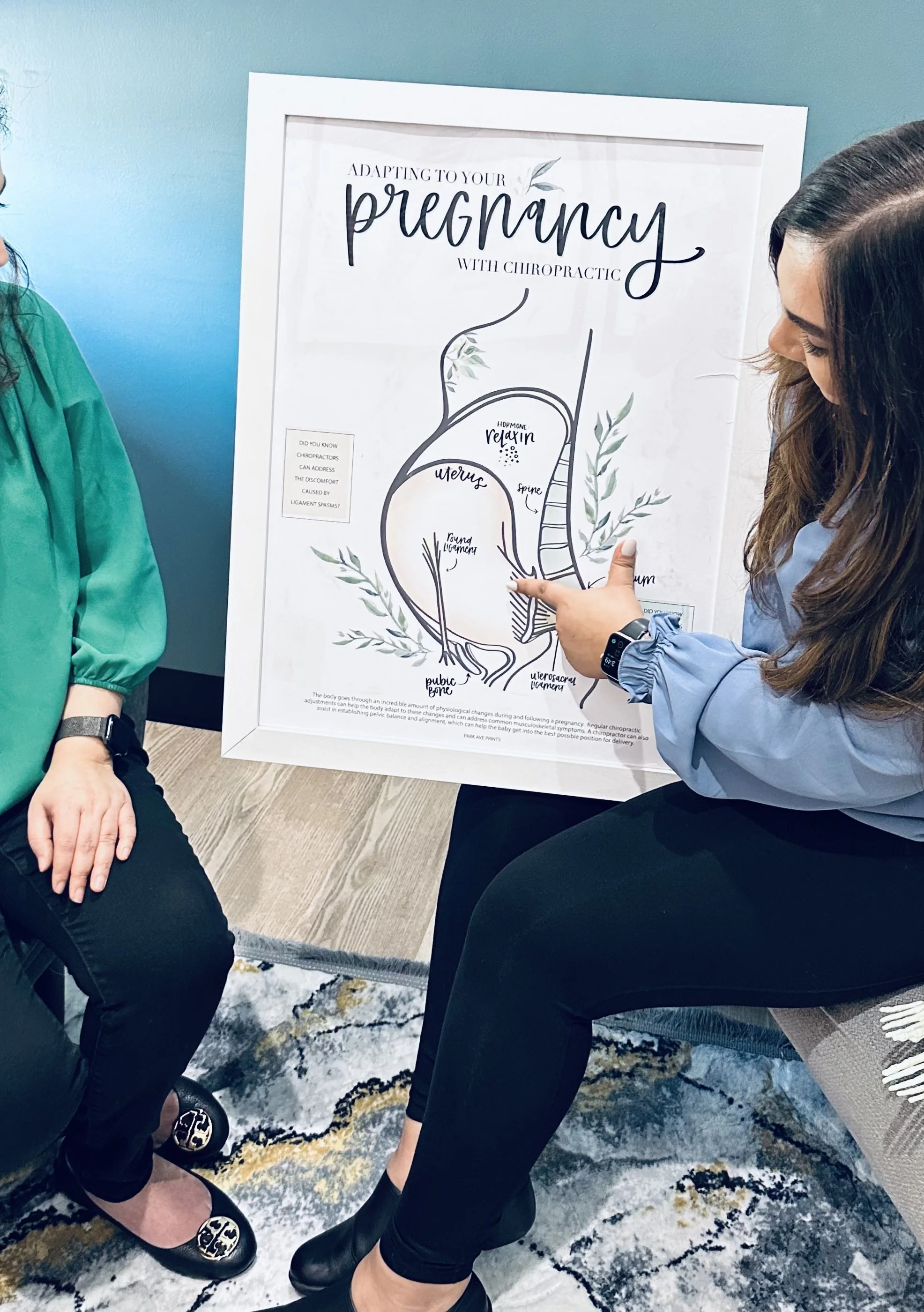
Relaxin softens your ligaments to prepare your pelvis for birth. The tradeoff is that the muscles around your pelvis work harder to stabilize you, and when they hold too much tension, your pelvis loses the balance your baby needs to settle into an ideal position.
-
Round ligament tension
The round ligaments and the ligaments supporting your uterus adapt as your baby grows. When those tissues are tight or unevenly pulled, they restrict the space your baby has to move.
-
Postural load
Long hours of sitting, especially in cars, at desks, and on soft couches, pull your pelvis into a forward tilt and limit sacral mobility. Your baby responds to the shape of the space they are in.
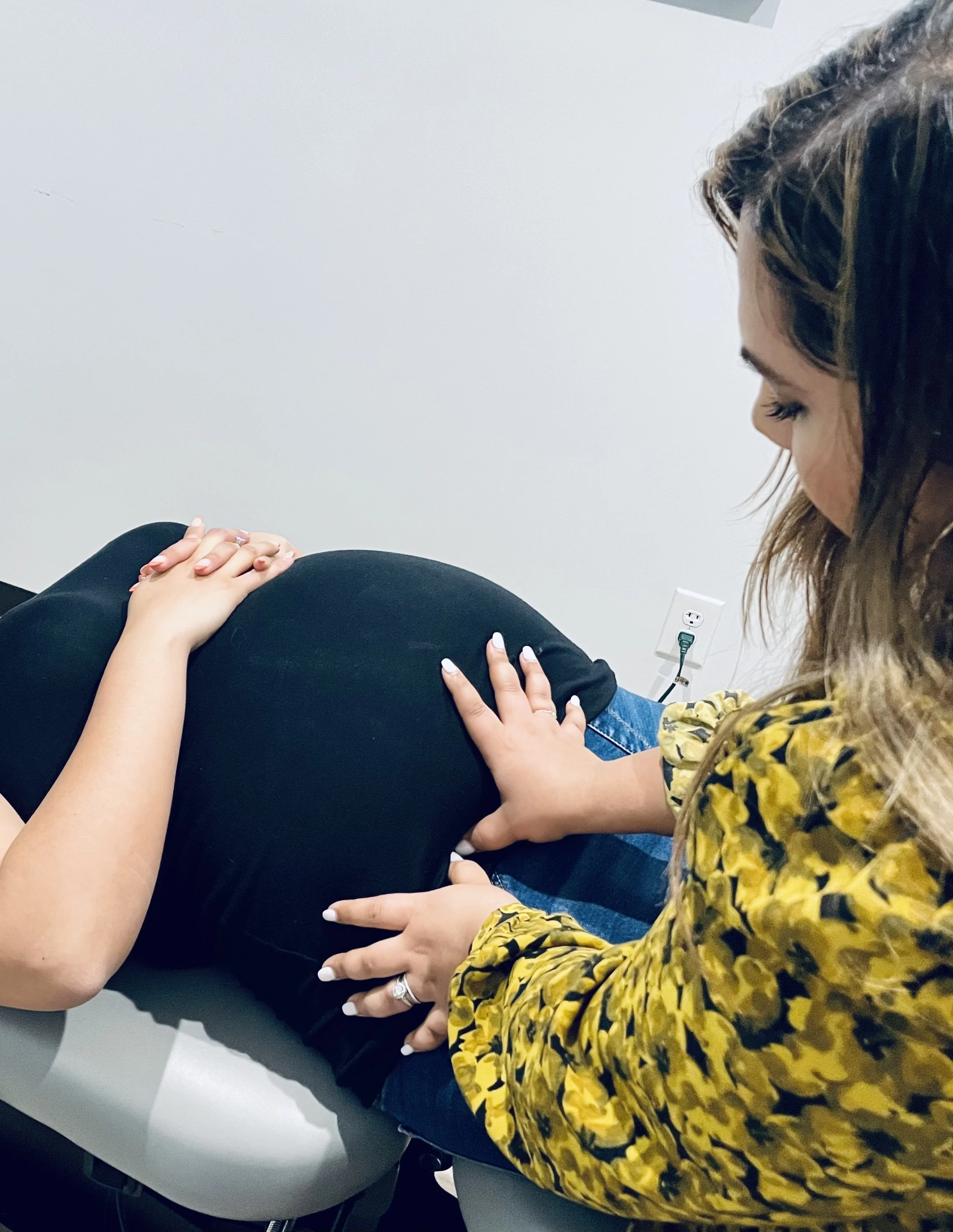
Every prenatal visit at Tula is 30 to 45 minutes of hands-on, full-body care. We don't isolate the symptom. We look at what your whole body is doing to understand the picture that shaped your baby's position in the first place.
We start with the soft tissue. The deep hip rotators, the psoas, the round ligaments, and the muscles along your lumbar spine hold significant tension during pregnancy. Working through those manually before addressing the spine directly makes room for the rest of the care to land.
We use craniosacral therapy to support your nervous system. When your body has been carrying pain or bracing for weeks, that pattern locks the surrounding tissue in place. Craniosacral work helps the nervous system release so the deeper work can hold.
Then we work with the spine and pelvis using the Webster Technique. Both of our doctors are Webster Certified through the ICPA, which means our approach is built around the physiology of pregnancy. We focus on pelvic balance, sacral mobility, and reducing tension in the soft tissue that shapes the space your baby is growing in.
No chiropractic technique turns a baby. What Webster does is help your body create space and balance so your baby has room to move on their own.
How we approach baby positioning at Tula
Your Prenatal Care at Tula Chiropractic

-
Most patients feel a shift within one to three visits. Some feel it immediately after the first session. Others take a few visits as their body releases longer-held compensation patterns. We give you our honest read at every step. Your care rhythm is built around your body, not a one-size schedule.
Whether or not your baby changes position is influenced by many factors, including the size and shape of your uterus, fluid levels, placental position, cord length, and the specific structural patterns in your body. Webster care supports the conditions for optimal positioning. The rest is between your body and your baby.
-
Hip and pelvic pain through pregnancy
Low back tension and SI joint discomfort
Round ligament pain and pubic bone pressure
Restricted sacral mobility and pelvic imbalance
Sitting and posture patterns that reduce space
Nervous system bracing and protective tension
Head-down, posterior, transverse, and breech positioning support
Soft tissue tension in the deep hip and pelvic floor
-
The most common thing we hear from prenatal patients after a few visits is that they wish they had come in sooner. There is no wrong trimester to start. We see first-time moms at week 6 and moms two days from their due date.
Earlier is generally easier on your body. Starting in the first or second trimester gives your body time to build balance before the third trimester demands land. Many patients who start early find that the symptoms and positioning concerns they expected simply never show up.
For patients working on positioning specifically, most start weekly care between 32 and 35 weeks. Starting after 38 weeks does not give the body enough time to respond, so we generally do not recommend it as a first visit.
If your baby is already breech and you are in your third trimester, it is not too late. We see patients at 34, 36, and 38 weeks and watch their bodies respond. Many of our patients integrate Webster care alongside other approaches their provider recommends, including Spinning Babies exercises, swimming, inversions, and ECV when indicated.
The most common thing we hear from patients carrying breech babies is some version of: I wish I had started this sooner.
Frequently asked questions about Webster Technique for breech presentation
Does the Webster Technique turn breech babies? No. The Webster Technique does not turn babies and we do not make that claim. What it does is reduce tension in the pelvis, sacrum, and surrounding soft tissue so your body has the best possible conditions for your baby to find optimal positioning on their own.
Is the Webster Technique safe during pregnancy? Yes. The Webster Technique was specifically developed for use during pregnancy and is one of the most established and widely used prenatal chiropractic protocols. It uses gentle, pregnancy-safe positioning and techniques tailored to every trimester.
When should I come in for positioning support? Most positioning patients start care between 32 and 35 weeks. Earlier is better if you have known your baby's position for longer. Starting after 38 weeks does not give your body enough time to fully respond.
Can I do Webster care alongside Spinning Babies or ECV? Yes. Webster Technique works well alongside other positioning approaches. Many of our patients combine chiropractic care with Spinning Babies exercises and continue prenatal care after an ECV to support recovery and continued balance.
What if my baby doesn't turn? We support you regardless of how your birth unfolds. Webster care benefits the entire prenatal experience, not just positioning. The pelvic balance, soft tissue work, and nervous system regulation continue to matter through birth and postpartum, whether your baby is head-down, breech, or somewhere in between.
Do I need a referral from my OB or midwife? No referral is required. We work alongside many McKinney-area OBs, midwives, and doulas, but you can book directly.
You don't have to push through this
Baby positioning is one of the most common concerns we support at Tula, and one of the things our care is built around. If you have been told to wait and see and something in you is asking whether there is more to be done, that instinct is worth listening to.
Tula Chiropractic provides Webster-based chiropractic care for breech presentation in McKinney, TX. Real relief, real explanations, and visits that meet what your body is actually going through.