ROUND LIGAMENT PAIN DURING PREGNANCY — McKINNEY, TX
What round ligament pain actually is
Round ligament pain is one of the most common and most misunderstood pregnancy symptoms. It shows up as a sharp, stabbing, or pulling sensation in the lower belly or groin, usually on one side. Some women feel it when they roll over in bed. Others feel it standing up too quickly, sneezing, or after a long day on their feet. For some, it's a quick jab that comes and goes. For others, it's a dull ache that lingers.
The round ligaments are two thick bands of connective tissue that run from the front of your uterus down to your groin. Their job is to hold your uterus in place. As your baby grows, these ligaments stretch — sometimes faster than your body adapts to the stretch. When that happens, the ligament tightens, spasms, or sends a sharp signal of strain.
Round ligament pain is not dangerous. But it is often disruptive, exhausting, and frustrating — especially when you've been told there's nothing you can do about it.
There is.
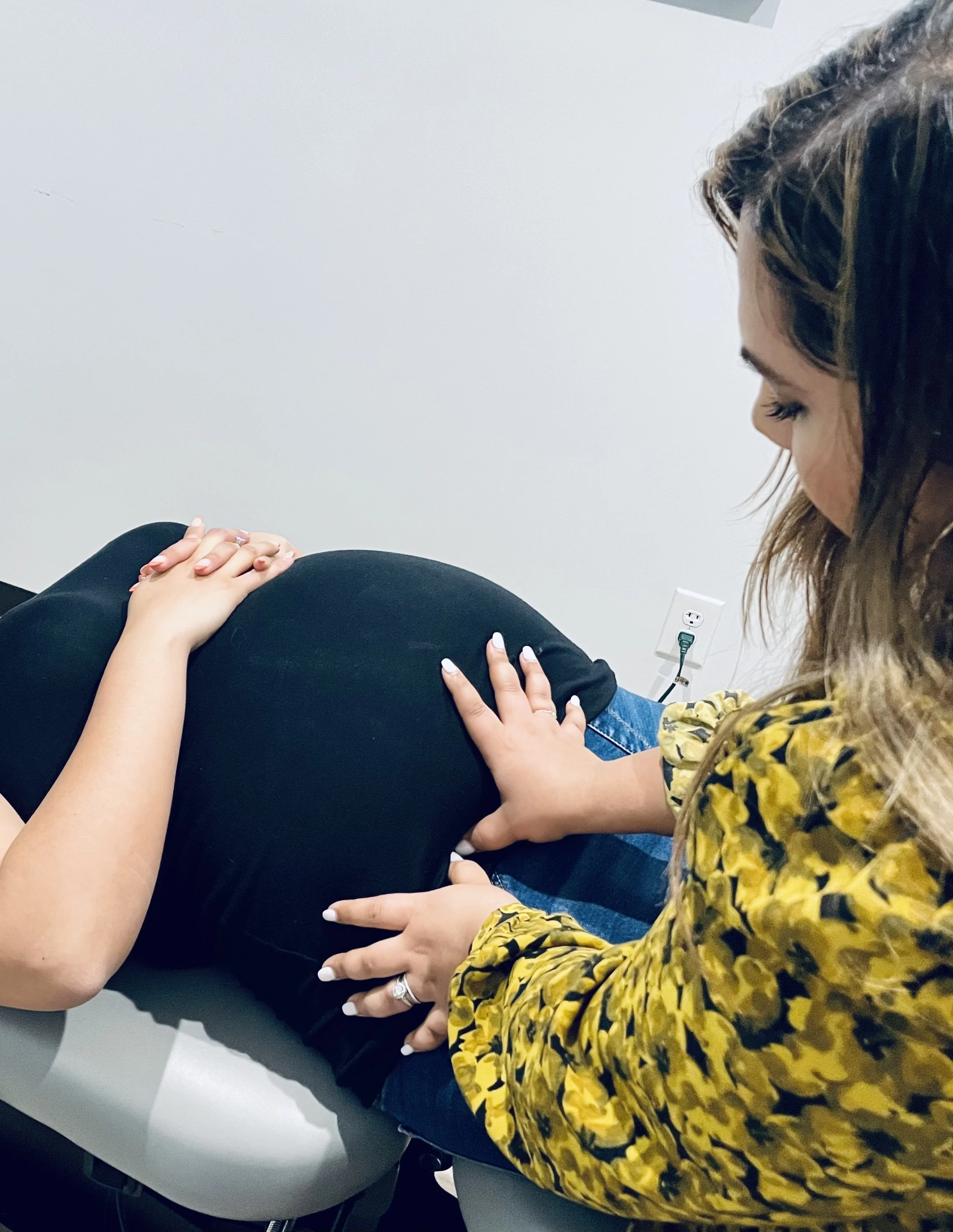
Prenatal Care
·
Prenatal Care ·
Why round ligament pain happens
Several things are happening in your body at the same time, and they all converge on the round ligaments.
Your uterus is growing rapidly, especially through the second trimester. The round ligaments stretch to accommodate that growth. Pregnancy hormones, especially relaxin, soften your connective tissue throughout the body — including these ligaments. While that softening is necessary for birth preparation, it also means the ligaments are more reactive to sudden movements.
At the same time, your pelvis is shifting. Your center of gravity moves forward. Your hip and pelvic alignment adapts week by week. When the pelvis is not balanced — when one side is tighter, more rotated, or holding more tension than the other — the round ligaments don't share the load evenly. One ligament ends up working harder than the other. That's why round ligament pain so often shows up on just one side.
The pain itself is the ligament protesting that workload. It's a signal that your body needs support, not punishment.
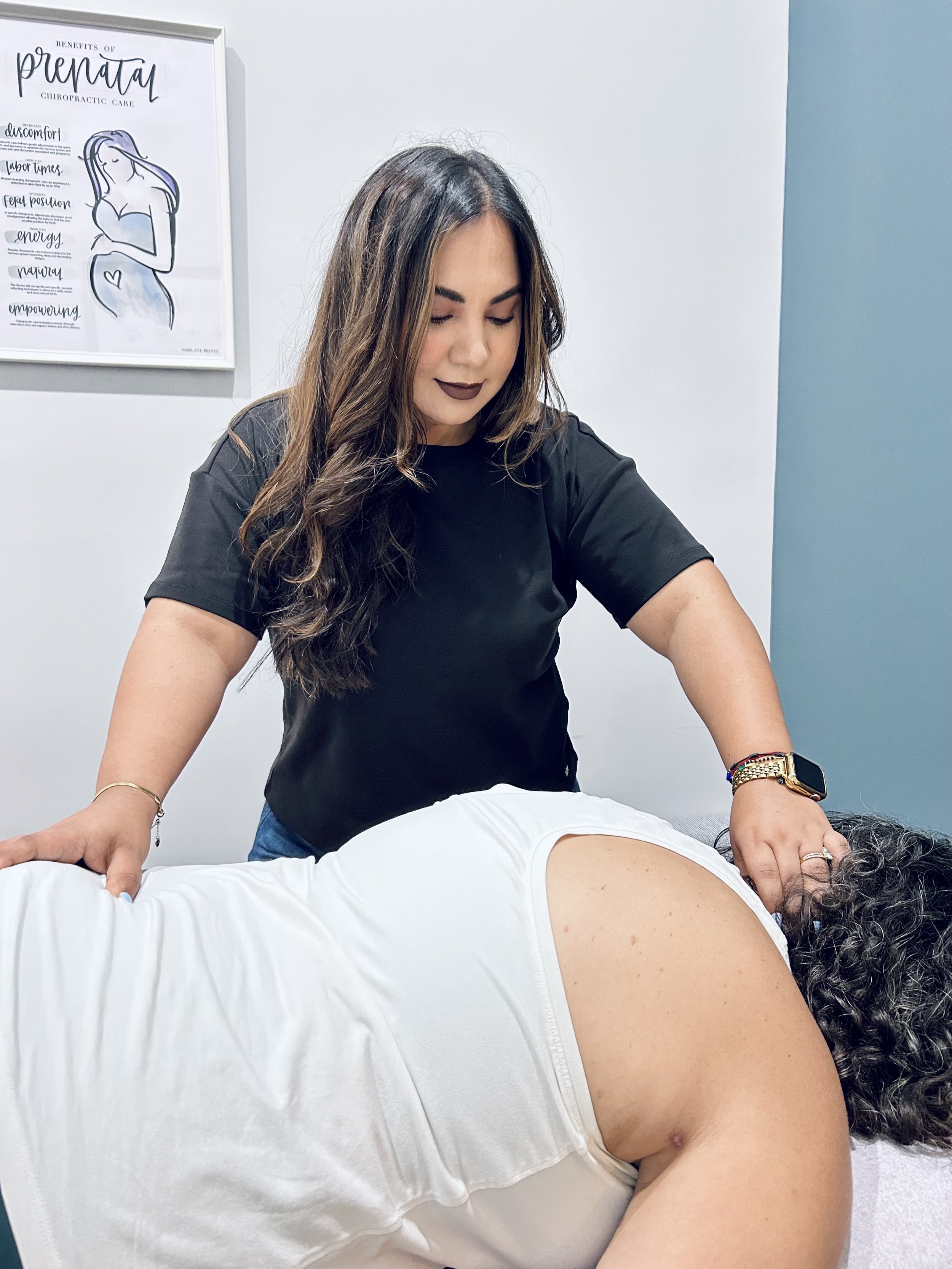
Why round ligament pain happens
-
Rapid uterine growth
Your uterus is expanding faster than the surrounding ligaments can adapt. This is most common in the second trimester when growth accelerates week by week.
-
Hormonal softening
Relaxin softens the connective tissue throughout your body, including the round ligaments. This is necessary for birth preparation but makes the ligaments more reactive to sudden movement.
-
Pelvic imbalance
When one side of your pelvis carries more tension than the other, the round ligaments don't share the load evenly. The harder-working side starts to spasm or strain.
How we approach pregnancy sciatica at Tula
Every prenatal visit at Tula is 30 to 45 minutes of hands-on, full-body care. We don't isolate symptoms. We look at what your whole body is doing to figure out why the round ligaments are reacting the way they are.
We start with the soft tissue. The hip flexors, the abdominal wall, the pelvic floor, and the muscles around the lower back and sacrum all influence how the round ligaments hold tension. We work through these areas manually to give the ligaments room to soften.
We use craniosacral therapy to settle your nervous system. When you've been bracing against pain — even unconsciously — your body locks the surrounding muscles in protective patterns. Craniosacral work helps that pattern release so the rest of the care can land.
Then we work with the spine and pelvis using the Webster Technique. Both of our doctors are Webster Certified through the ICPA. Webster is specifically designed to address pelvic balance, sacral mobility, and round ligament tension during pregnancy. It is the protocol developed for exactly what you're experiencing.
We don't just do a quick adjustment and send you on your way.
Your Prenatal Care at Tula Chiropractic
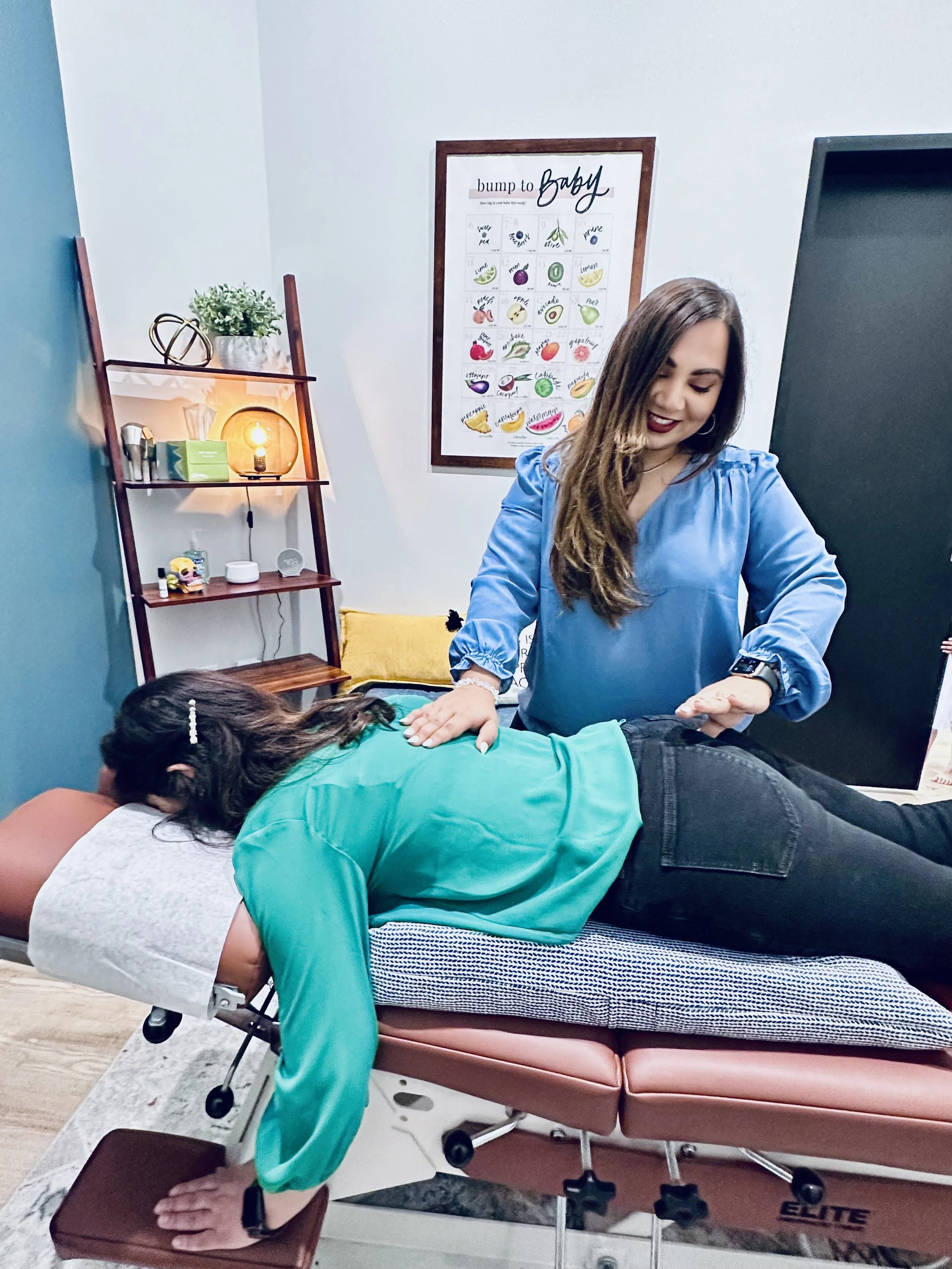
-
Most patients with round ligament pain feel a meaningful difference within one to three visits. Some feel a release on the table during the soft tissue work. Others notice that the sharp jabs are less frequent over the next few days, then less intense, then less common until the pattern resolves.
Your care rhythm is built around your body, not a fixed schedule. We give you our honest recommendation after your first visit and we follow your lead from there.
Your care rhythm is built around your body, not a one-size schedule. We give you our clinical recommendation and then we follow your lead.
-
Sharp, stabbing pain in the lower belly or groin
Pulling sensations on one side of the pelvis
Pain that flares with movement, coughing, sneezing, or rolling over
Lower abdominal tension and bracing
Pelvic imbalance and sacral restriction
Tight hip flexors and pelvic floor
One-sided pelvic discomfort
Nervous system bracing from chronic pain
Tension that worsens through the day
Compensatory low back and hip pain
-
The most common thing we hear from prenatal patients after a few visits is that they wish they had come in sooner. There's no wrong trimester. We see first-time moms in week 6 and we see moms two days from their due date.
Round ligament pain often shows up between weeks 14 and 26, when uterine growth is at its fastest. Starting care during this window often resolves the pattern before it becomes a longer-term issue. If you're already past that point and the pain has stayed, it is not too late. We have helped moms find significant relief at 36, 38, even 40 weeks.
Frequently asked questions about round ligament pain
Is chiropractic care safe for round ligament pain during pregnancy? Yes. Both of our doctors are Webster Certified through the ICPA, which is the specific chiropractic training developed for pregnancy. We use pregnancy-safe positioning and techniques tailored to every trimester. Round ligament pain is one of the conditions Webster Technique was designed to address.
Can chiropractic care actually help round ligament pain or do I just have to wait it out? Chiropractic care addresses the underlying tension patterns that are causing the round ligaments to spasm in the first place. When pelvic balance is restored and the surrounding soft tissue releases, the round ligaments stop carrying the uneven load. The pain typically resolves as the underlying pattern changes.
How many visits before I feel relief? Most patients feel a meaningful change within one to three visits. Some feel a release on the table during their first session. Others take a few visits as their body releases longer-held tension patterns.
Is round ligament pain dangerous? No. Round ligament pain itself is not a sign of anything dangerous. However, severe or persistent abdominal pain during pregnancy should always be evaluated by your OB or midwife to rule out other causes. We work alongside your medical team, not in place of it.
Can I come in if I'm already in my third trimester? Yes. The body responds at every stage. We have supported moms with round ligament pain through their final weeks of pregnancy.
You don't have to push through this
Round ligament pain during pregnancy is one of the most common things we see at Tula, and one of the things our care is built to support. If you've been told this is just part of pregnancy and you're starting to wonder if there's another option, trust the part of you that knows there is.
Tula Chiropractic provides Webster-based chiropractic care for round ligament pain in McKinney, TX. Real relief, real explanations, and visits that meet what your body is actually going through.