Sciatica During Pregnancy: What's Happening and How We Help
What sciatica during pregnancy actually is
Sciatica refers to pain that travels along the sciatic nerve, the longest nerve in your body, which runs from the lower back through the hips and down each leg. During pregnancy, sciatica typically shows up as sharp, shooting, or burning pain on one side. It can travel into the buttock, down the back of the leg, and sometimes into the foot. For some women it's a constant ache. For others it flares with movement, sitting, or sleeping on one side.
Pregnancy sciatica is not the same as the disc-related sciatica seen in non-pregnant patients. The cause is usually different, which means the care needs to be different too.
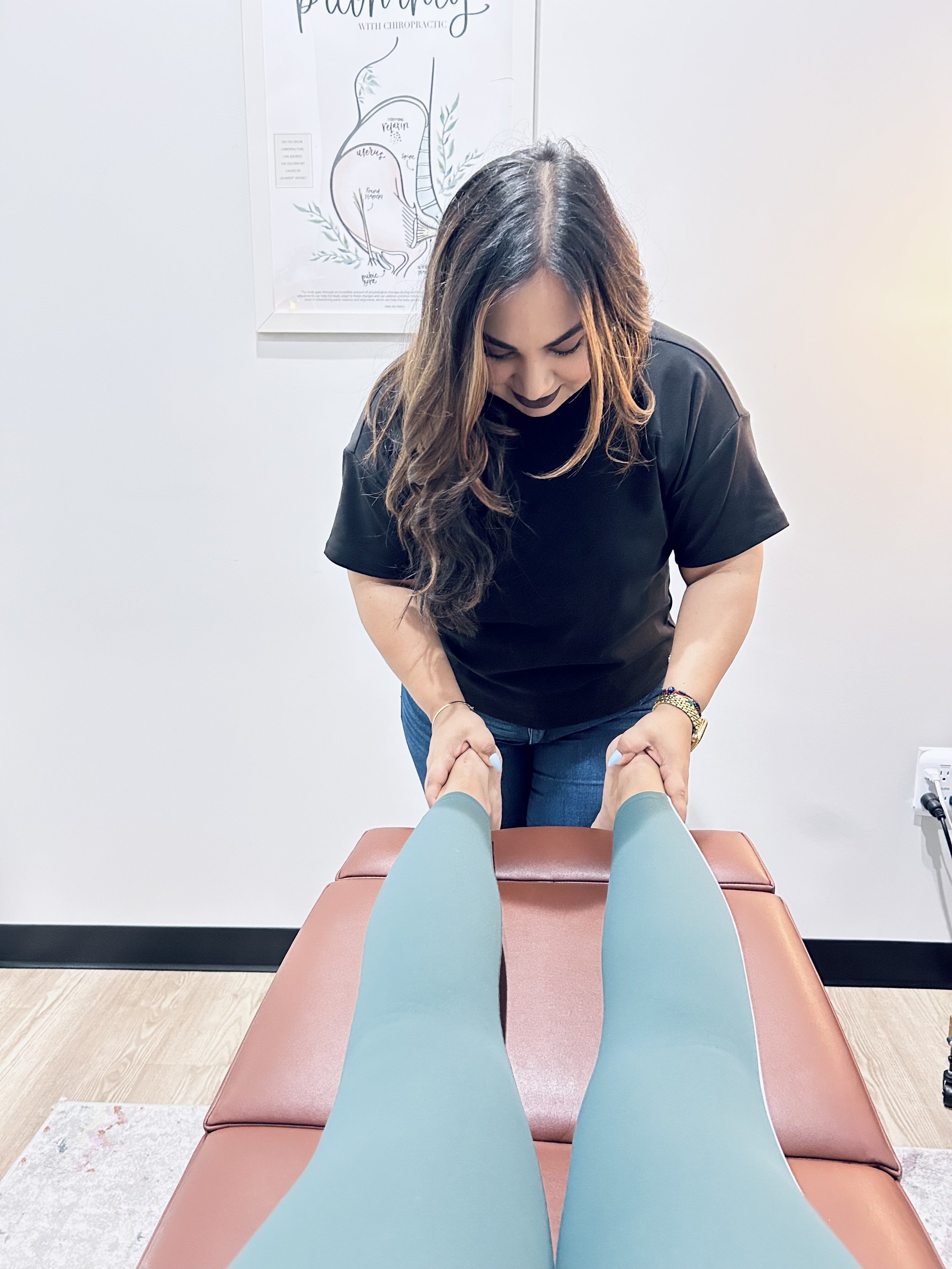
Prenatal Care
·
Prenatal Care ·
Why sciatica is so common during pregnancy
Your body is doing extraordinary work, and several shifts happen at once that can put pressure on the sciatic nerve.
The hormone relaxin softens your ligaments so your pelvis can prepare for birth. This is necessary. It also reduces the stability of your sacroiliac joints, the place where your pelvis meets your spine. When those joints become less stable, the muscles around them — including the deep glute muscle called the piriformis — work harder to compensate. The piriformis sits directly over the sciatic nerve. When it tightens or shortens, it can press into the nerve and create the symptoms you're feeling.
Your growing uterus also shifts the position of your pelvis forward and increases the demand on your lower back and hips. The pelvic alignment changes. The center of gravity moves. The way you stand, walk, and sleep adapts week by week. All of it can put new pressure on the sciatic nerve.
Sciatica during pregnancy is not a sign that something is wrong. It is a sign that your body is asking for support that it isn't getting yet.

WHAT YOUR BODY IS DOING
-
Soft tissue tension
The piriformis and deep hip muscles work harder during pregnancy to stabilize a softening pelvis. When they tighten, they press into the sciatic nerve and cause pain or discomfort.
-
Pelvic shift
As your uterus grows, your pelvis tilts forward. This changes the way your spine, hips, and sacrum carry weight, which often shifts pressure onto the sciatic pathway.
-
Nervous system bracing
Pain that lasts more than a few days puts your nervous system into a protective pattern. That bracing keeps the surrounding muscles guarded and locks the pain in place.
How we approach pregnancy sciatica at Tula
Every prenatal visit at Tula is 30 to 45 minutes of hands-on, full-body care. We don't isolate the symptom. We look at what your whole body is doing to figure out what's actually creating the pressure on the sciatic nerve.
We start with the soft tissue. The piriformis, the glute medius, the deep hip rotators, and the muscles along your lumbar spine often hold significant tension during pregnancy. We work through those manually before we ever address the spine directly. This alone can bring real relief.
We use craniosacral therapy to support your nervous system. When you've been in pain for weeks, your body holds a protective bracing pattern that keeps the surrounding muscles guarded. Craniosacral work helps the nervous system release that pattern so the rest of the care has somewhere to land.
Then we work with the spine and pelvis using the Webster Technique. Both of our doctors are Webster Certified through the ICPA, which means our approach is built around the actual physiology of pregnancy. We focus on pelvic balance, sacral mobility, and reducing tension in the round ligaments and surrounding soft tissue.
We don't just do a quick adjustment and send you on your way.
Your Prenatal Care at Tula Chiropractic

-
Most patients with pregnancy sciatica feel a noticeable difference within one to three visits. Some feel it immediately after the first session. Others take a few visits as their body releases longer-held compensation patterns. We give you our honest read at every step.
Your care rhythm is built around your body, not a one-size schedule. We give you our clinical recommendation and then we follow your lead.
-
Sharp, shooting, or burning pain down one leg
Deep ache in the buttock or hip
Pain that worsens with sitting, standing, or sleeping on one side
Numbness or tingling along the leg
Pelvic instability and SI joint pain
Tight piriformis and deep hip muscle tension
Lower back pain that started or worsened during pregnancy
Restricted pelvic and sacral mobility
Nervous system bracing and protective tension patterns
Carpal tunnel and other pregnancy-related nerve symptoms
-
The most common thing we hear from prenatal patients after a few visits is that they wish they had come in sooner. There's no wrong trimester to start. We see first-time moms in week 6 and we see moms two days from their due date.
Earlier is generally easier on your body. Starting in the first or second trimester gives your body more time to build balance before the third trimester demands hit. Many patients who start early find that the symptoms they expected to develop simply never show up.
Starting late still works. We have helped moms find real relief at 36, 38, even 40 weeks.
Frequently asked questions about pregnancy sciatica
Is chiropractic care safe for sciatica during pregnancy? Yes. Both of our doctors are Webster Certified through the ICPA, which is the specific training developed for chiropractic care during pregnancy. We use pregnancy-safe positioning and techniques tailored to every trimester. Pregnancy is one of our core specialties, not an adapted offering.
Will chiropractic care actually help my sciatica or just mask the symptoms? Chiropractic care for pregnancy sciatica works by addressing what's creating the pressure on the nerve, not by numbing the pain. We work through the soft tissue, support pelvic balance, and reduce the muscular and structural patterns that are creating the symptoms in the first place. When the cause is addressed, the symptoms typically resolve.
How many visits before I feel relief? Most patients feel a meaningful change within one to three visits. Some feel it immediately. Others take longer depending on how long the pattern has been building and how much soft tissue tension is involved. We give you a clear, honest care rhythm after your first visit.
Can I come in if I'm already in my third trimester? Yes. It is not too late. We have helped moms find significant relief at 36, 38, and 40 weeks. The body responds at every stage when it gets the right support.
Do I need a referral from my OB or midwife? No referral is required. We work alongside many McKinney-area OBs, midwives, and doulas, but you can book directly with us.
You don't have to push through this
Pregnancy sciatica is one of the most common things we see at Tula, and one of the things our care is built to support. If you've been told this is just part of pregnancy and you're starting to wonder if there's another option, trust the part of you that knows there is.
Tula Chiropractic provides Webster-based chiropractic care for pregnancy sciatica in McKinney, TX. Real relief, real explanations, and visits that meet what your body is actually going through.